
For more than 25 years, my work in technology has centered on a fundamental problem: how do organizations manage information and turn it into something useful?
Long before AI became the focus of the technology industry, enterprises were already dealing with enormous volumes of documents, images, records, forms, correspondence, business data, archives, and regulated information.

Those systems had to capture information, store it, secure it, search it, move it through workflows, retain it, integrate it, migrate it, and eventually dispose of it.
That is the world I come from.

My Background Is Enterprise Engineering
My career has crossed software engineering, systems integration, solution architecture, enterprise applications, automation, content management, and business process transformation.
I have worked with technologies and platforms associated with Documentum, ApplicationXtender, OpenText, IBM, Kofax/Tungsten, Captiva, and other enterprise environments.
These were never simply document systems. Platforms such as ApplicationXtender combined administration, application configuration, storage, security, databases, archival services, integration, and workflow into broader enterprise architectures. AppXtender Core Components Admi…

The technology has changed dramatically over the years. The underlying business problems have not.
Organizations still need to answer:
Where is the information? Who can access it? What does it mean? What process does it belong to? How long must we keep it? How does it connect to everything else?

From Enterprise Content to Enterprise Intelligence
Today, those same problems extend into APIs, cloud platforms, automation, analytics, intelligent document processing, and AI.
The progression is increasingly:
Capture → Understand → Store → Search → Process → Govern → Integrate → Analyze → Modernize
That evolution is one reason I created the Samuels Enterprises Enterprise Engineering portfolio.

Rather than simply listing technologies on a résumé, I wanted to demonstrate the engineering.
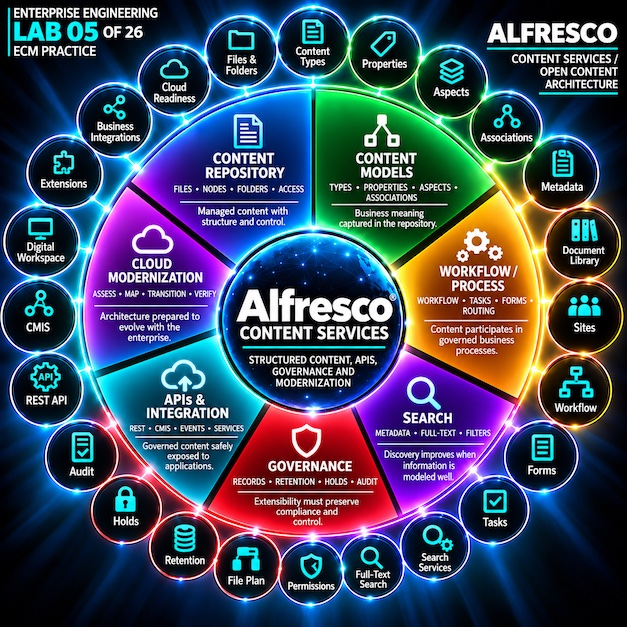
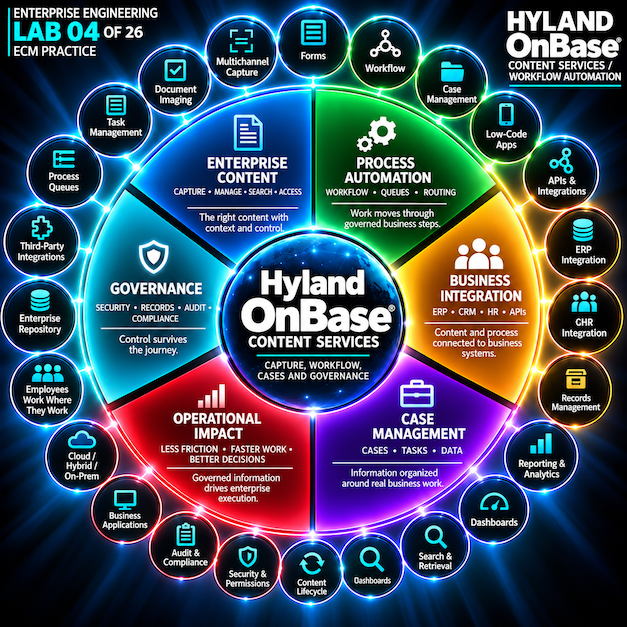
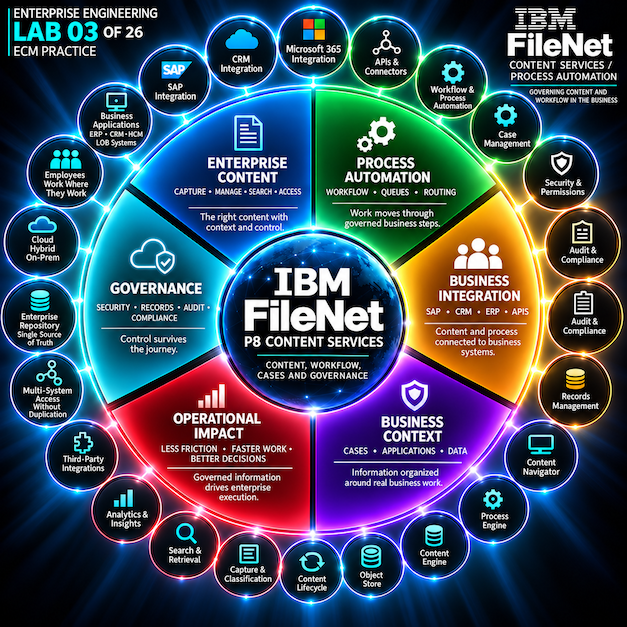
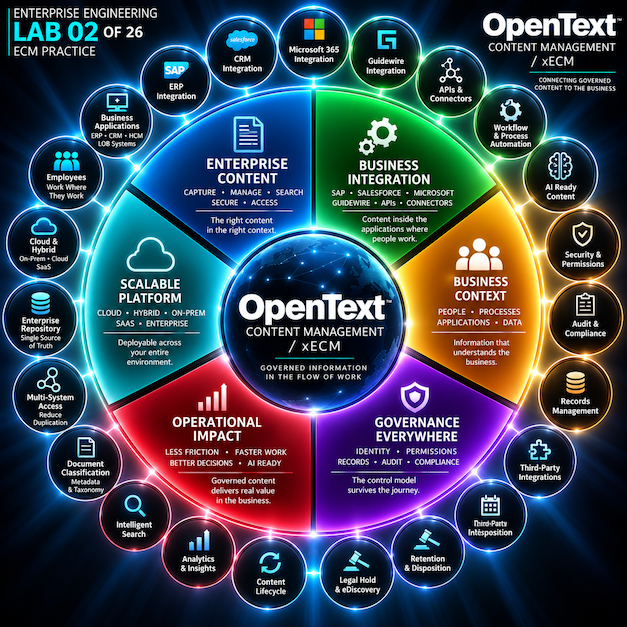
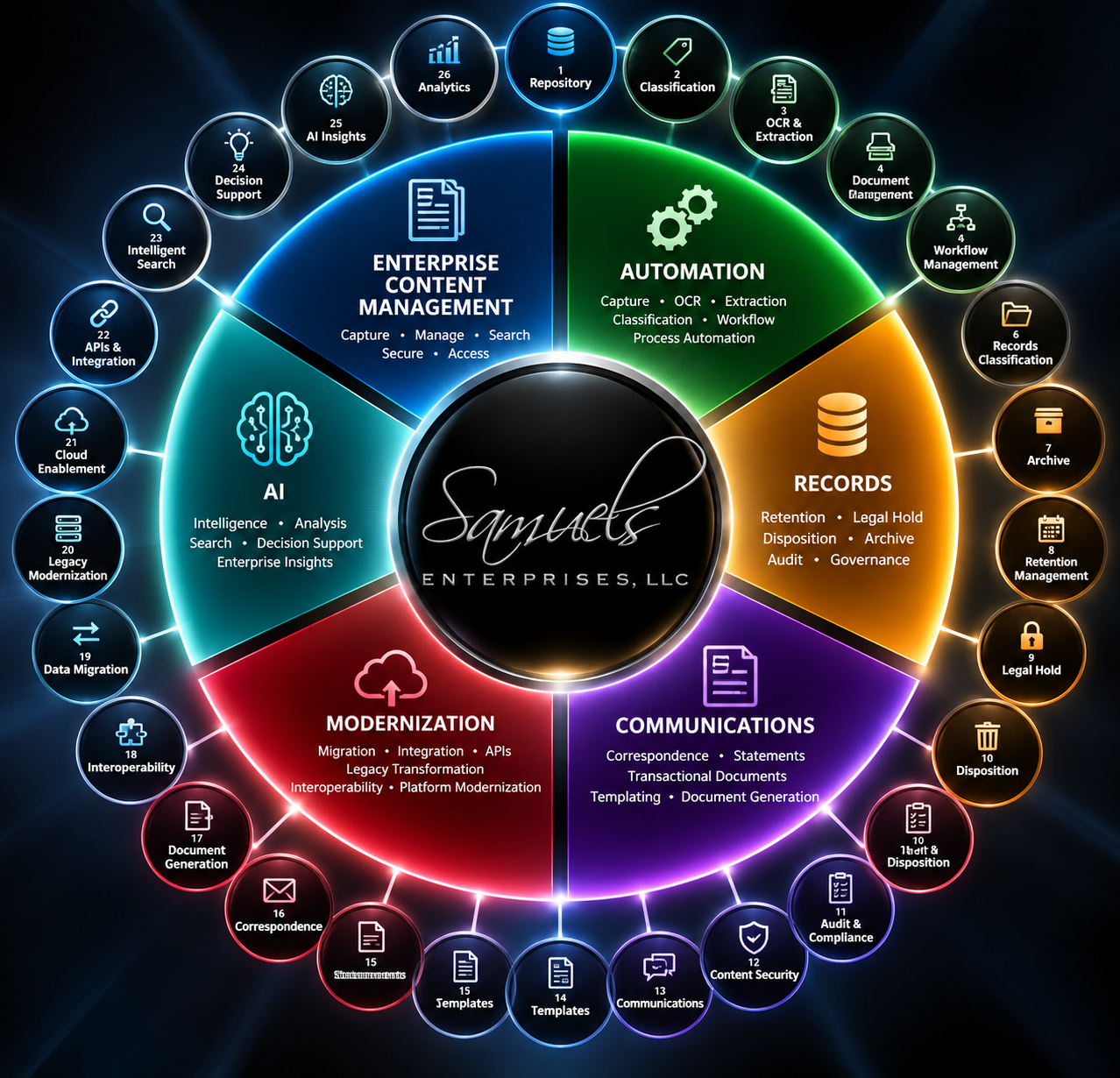
The result is 26 live Enterprise Engineering applications spanning six primary areas:
Enterprise Content Management
Document and content platforms, repositories, metadata, search, security, and information architecture.
Automation
Capture, OCR, intelligent document processing, workflow, classification, extraction, and process automation.
Records
Retention, legal hold, disposition, archival management, audit, provenance, and governance.
Communications
Enterprise correspondence, statements, transactional documents, templating, and document generation.
Microsoft
SharePoint and Microsoft 365 enterprise content, collaboration, document management, productivity, automation, governance, security, and cloud integration.
Modernization
Migration, integration, APIs, legacy transformation, interoperability, and platform modernization.
AI
Applying modern intelligence to enterprise information, documents, workflows, search, analysis, and decision support.

Why Build 26 Applications?
Because I believe engineering is better demonstrated than described.
The applications are not intended to reproduce commercial software products. They are working engineering laboratories demonstrating how I approach architecture, information models, workflows, integration, user experience, modernization, and emerging AI capabilities.
My approach remains the same one I have used throughout my career:
Start with the business problem.
Then work outward through requirements, information, architecture, workflow, integration, intelligence, interface, and deployment.
That philosophy also extends into the broader technology work being developed at Samuels Enterprises.

26 Applications. 26 Stories.
This article is only the introduction.
Over the coming weeks, I will take a closer look at the individual applications and the engineering disciplines behind them—from ECM, capture and workflow to records management, document generation, migration, modernization, APIs, and AI.
Some of these technologies reach back decades. Others represent where enterprise computing is heading now.
The connection between them is the part I find most interesting.
Twenty-five years ago, we were trying to make enterprise information manageable.
Today, we are trying to make enterprise information intelligent.
The tools changed.
The engineering continues.
Until Next Time…
I Am,
Ewing R. Samuels III
Founder / Principal Solution Architect
Samuels Enterprises, LLC