
Artificial intelligence did not suddenly make me creative.
It did not teach me how to write songs, produce records, engineer software, understand business, manage intellectual property, or see how technology changes industries.
What A.I. has given me is leverage.
That is the point too many people are missing.
A.I. is a tool. And like every transformative tool before it, the advantage will belong to the people who understand how to use it.
Those who master the tools will move faster, produce more, test more ideas, reduce costs, organize information more efficiently and compete at a scale that previously required larger teams, larger budgets and access to powerful gatekeepers.
Those who spend all their energy fighting the tools risk becoming the dinosaurs of this technological transition.
Not because every concern about A.I. is illegitimate. Copyright, consent, ownership and compensation remain serious issues.
But resisting technological change simply because it disrupts an old advantage is something entirely different.
I Already Wrote This
On February 21, 2026, I published “A Strategic Signal to the Market: Music, A.I., and the Illusion of Control.”
I wrote plainly:
“A.I. is not your enemy. It is a tool.”
I also wrote that those who learn it would expand their output and accelerate their iteration, while those who fear it would be outpaced not by machines, but by other humans who use machines well.
That same article argued that the power dynamic was shifting “from gatekeeper to operator,” and that the real danger was not technological adoption but technological illiteracy.
That is becoming increasingly obvious.
In June, I expanded that argument in “What A.I. Reveals.”
A.I. is lowering barriers that historically included expensive equipment, restricted information, institutional access and larger production budgets. As access becomes more equal, the underlying ability of the person using the technology becomes easier to see.
That is where this gets interesting.

The Playing Field Is Leveling
For decades, portions of the creative industries benefited from scarcity.
You needed access.
You needed money.
You needed equipment.
You needed studio time.
You often needed someone to let you through the door.
Technology has been dismantling those barriers for years, and A.I. accelerates that process dramatically.
That does not mean everybody suddenly becomes equally talented.
It means more people get access to comparable tools.
And when the tools become widely available, the tools themselves become less of the differentiator.
Talent does.
Judgment does.
Taste does.
Experience does.
Originality does.
Discipline does.
Execution does.
The playing field becoming more level does not eliminate exceptional people.
It makes exceptional people harder to hide.

“How Are You Making So Many Songs?”
A lot of people have asked me this.
The easy answer would be A.I.
The more accurate answer is that I was always writing music, since 1992.
The ideas did not suddenly appear because generative technology arrived.
Studio time is expensive. Production is expensive. Musicians, engineers, mixing and mastering all cost money.
Meanwhile, life keeps happening.
Love.
Loss.
Business.
Relationships.
Trauma.
Tragedy.
Success.
Failure.
Struggle.
Survival.
Reinvention.
All of that becomes material.
So what people are seeing today is not simply a machine creating an endless stream of ideas for me.
They are seeing a reservoir accumulated over decades finally connected to tools capable of processing that reservoir much faster.
A.I. did not fill it.
Life did.
And lived experience matters.
Someone can certainly live a comfortable, relatively stable life and still be enormously talented. But struggle, movement, failure, loss and reinvention can create perspectives that comfort alone may never require someone to develop.
Experience gives language context.
A.I. cannot manufacture that history.
It can only help me leverage it.
Dre and Iovine Understand What Is Happening

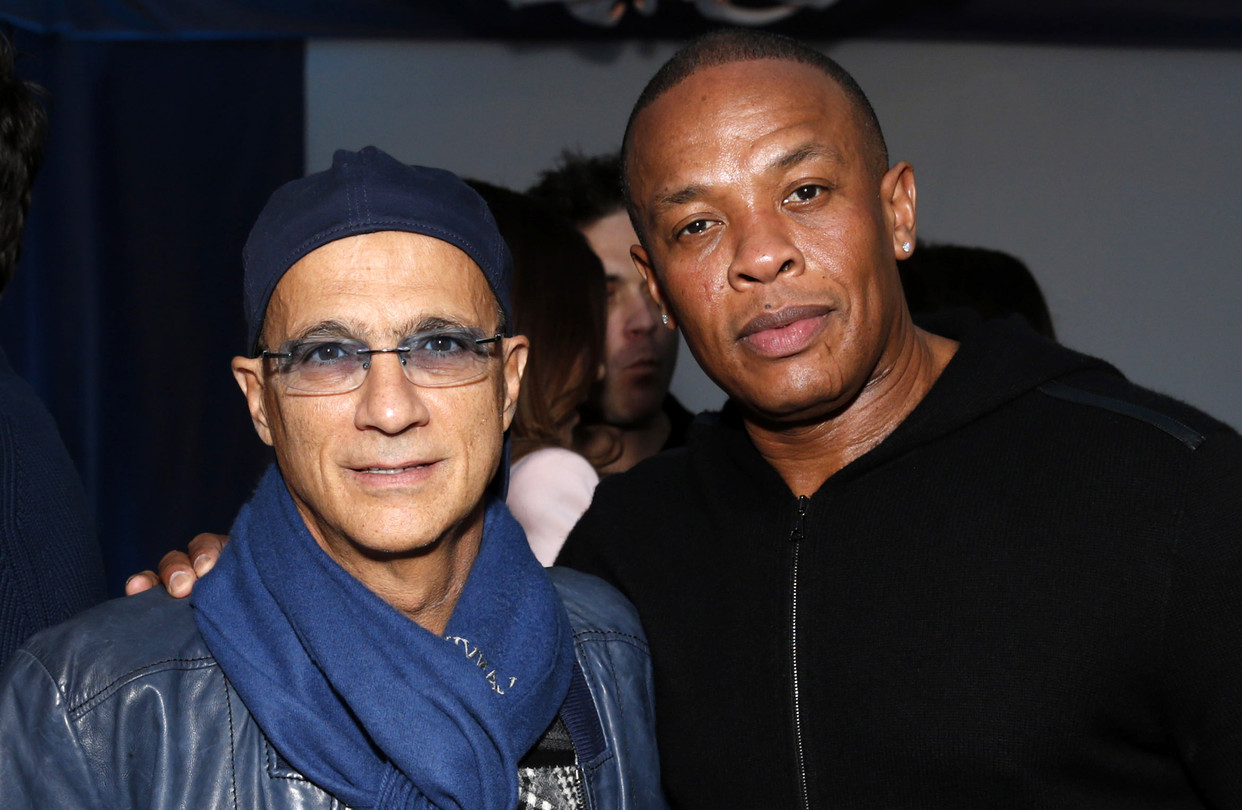
That is why the recent statements from Dr. Dre and Jimmy Iovine are so significant.
Dre compared resistance to A.I. with resistance to drum machines and synthesizers and described A.I. as another creative tool. He also acknowledged using A.I. in his own music workflow. Jimmy Iovine noted that there are already many “closet AI producers” working with the technology.
These are legendary music executives and producers associated with an era of Interscope that helped redefine modern music.
They are not software engineers.
They do not have to be.
They understand tools.
They understand disruption.
They understand leverage.
And most importantly, they are cognizant enough to recognize that refusing to learn a technology does not stop the people who are learning it.
It simply increases the distance between them.

The Dinosaurs Are Identifying Themselves
Every technological transition produces resistance.
The recording industry resisted various forms of technological change long before artificial intelligence appeared.
But history repeatedly rewards adaptation.
In my February article, I wrote that transformative tools—from recorded sound and radio to television and the internet—were resisted by entrenched interests, yet the technologies continued forward. I also wrote that creators ultimately face a choice: “Resist tools, or master them.”
That choice is becoming sharper.
People who refuse to understand the tools while insisting the world preserve their previous advantages may believe they are protecting their relevance.
They may actually be demonstrating how dependent their relevance was on the old system.
That is the dinosaur problem.
When the environment changes, strength under the old conditions does not guarantee survival under the new ones.
Adaptability matters.
Talent Will Matter More, Not Less
There is another misconception that A.I. will make everybody equally capable.
I believe almost the opposite.
When millions of people possess similar tools, simply owning the tool provides very little advantage.
A camera does not make everybody a great photographer.
A DAW does not make everybody a great producer.
A word processor does not make everybody a great writer.
And A.I. does not automatically create vision, judgment, discipline or experience. As I wrote in June, millions of people can access similar technology and still produce very different results because “the difference remains the person directing the tool.”
That is why true talent may become even more visible.
When access is no longer the primary barrier, performance becomes harder to explain away.
If everybody has the tool, then show me what you can do with it.
That is the new competition.
That Is Leverage
I am not competing against artificial intelligence.
I am using it.
I am not asking it to replace my experience.
I am multiplying my experience with it.
I am not asking it to create my ideas.
I am using it to accelerate my ability to execute them.
And I believe that is increasingly where the competitive advantage will reside.
Those who understand the tools will have leverage.
Those who master them will have even more.
Those who refuse to learn them may spend years fighting a world that has already moved past them.
The playing field is leveling.
The gatekeepers are losing some of the scarcity that once protected their position.
And when access becomes more equal, there is nowhere for mediocre ability to hide behind access, money or institutional control.
Ultimately, the technology will not decide who is truly talented.
It may simply make the answer much easier to see.
Until Next Time…
I Am,
Ewing R. Samuels III